
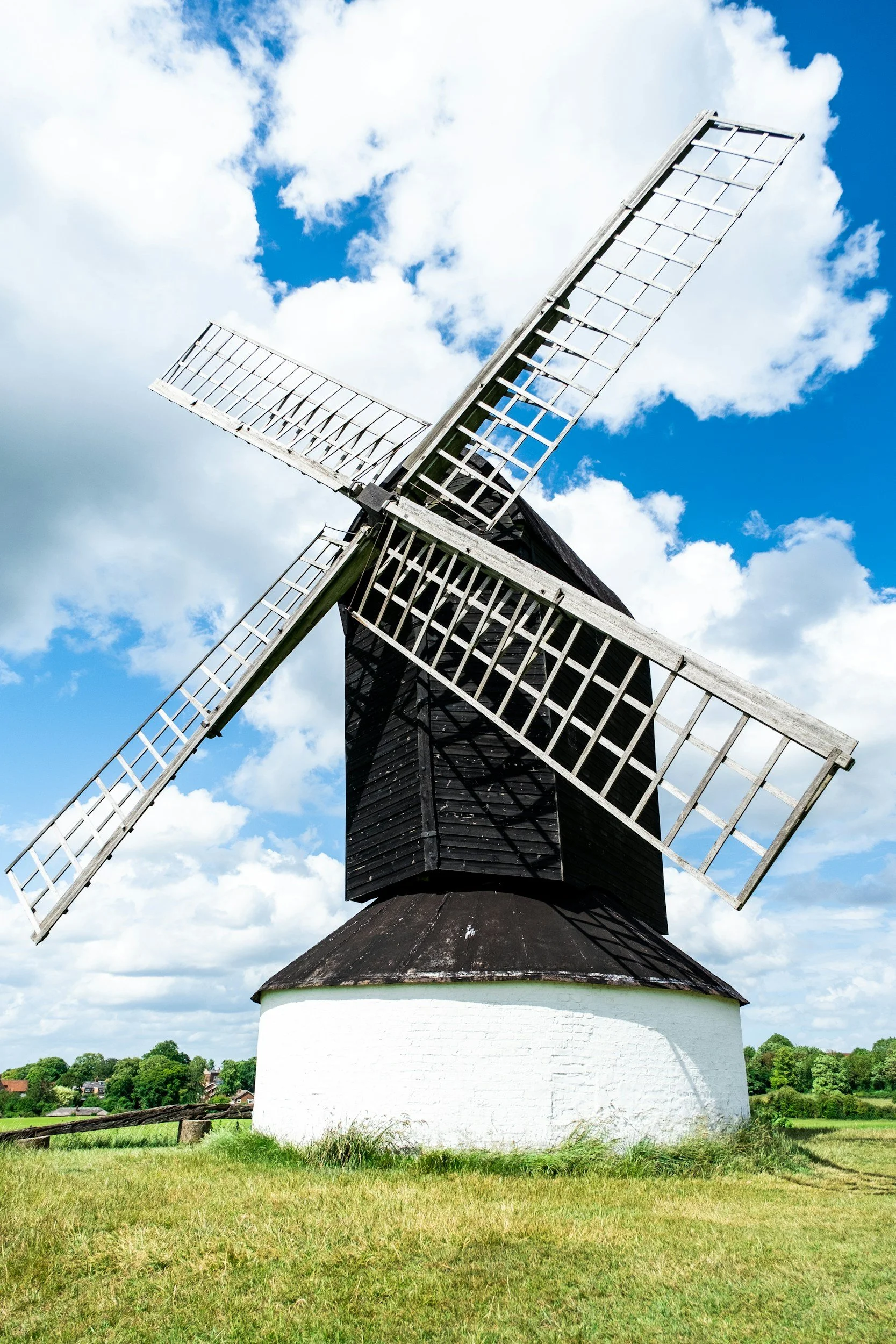
Climate-Related Risks to Heritage: in Collaboration with Kent County Council
In collaboration with the Kent County Council, the upper-tier government for the non-metropolitan area of Kent County in England, the DRAGEN Lab and SSHRC PG Environments of Change worked to create a value-based climate risk framework to identify which of Kent’s 90,000 heritage sites are most vulnerable to future precipitation and temperature hazards. The study highlights where urgent preservation strategies are needed as climate pressures intensify.

Meet the Team

Primary Investigator
University of Waterloo
History
Dr. Steven Bednarski

Project Lead
University of Waterloo
School of Environment
Dr. Bamise Afolabi

Project Lead
University of Waterloo
Earth Sciences
Dr. Zihan Zhang
Heritage sites, historical markers rich in cultural information, require careful conservation and transmission for the benefit of future generations. In Kent, in the southeast of England, there are today approximately 90,000 such heritage assets. They preserve identity, transfer generational knowledge, provide livelihoods, and sustain ecological processes. These heritage assets were not, however, designed to withstand environmental pressures resulting from long-term climatic disturbances caused by climate change.
To prioritize the Kentish assets at risk from a changing climate, and to work towards preserving them, our study developed a value-based quantitative climate risk management framework. Our analysis revealed that by the latter half of the century (2061 – 2080), three environmental pressures – namely, a Radiative Concentration Pathway (RCP) of 8.5, an increase in annual accumulated precipitation of 20%, and a 93% rise in R20 values (days in which precipitation is ≥20mm in a year) – will move over 76,000 monuments in Kent into high and extremely high risk zones resulting from precipitation hazards. These risk categorizations and their impacts varied across the time scales studied, whether near-term (2021 – 2040) or long-term (2061 – 2080).
The number of monuments in the northeast and northwest of Kent (e.g., Margate, Canterbury and Gravesham) that we determined to be at extremely high risk of maximum annual precipitation hazard, moreover, increased by 25% to 25,000 in the long-term projections (2061 – 2080), as compared to near-term projections (2021 – 2040).
Our study also observed that, on average, the risk of gradual temperature increased into the future (2061 – 2080), while that of drastic change followed a slight decline for the studied location. Approximately 41,000 monuments in Kent, thus, were moved from a high risk to a very high-risk category of gradual temperature increase by the end of the century.
All of this points to a need to adopt robust risk management strategies that can mitigate these climate-related impacts and preserve Kent’s varied heritage assets.