
Unearthing the Past: Archaeology at Boulby Brow Quarry
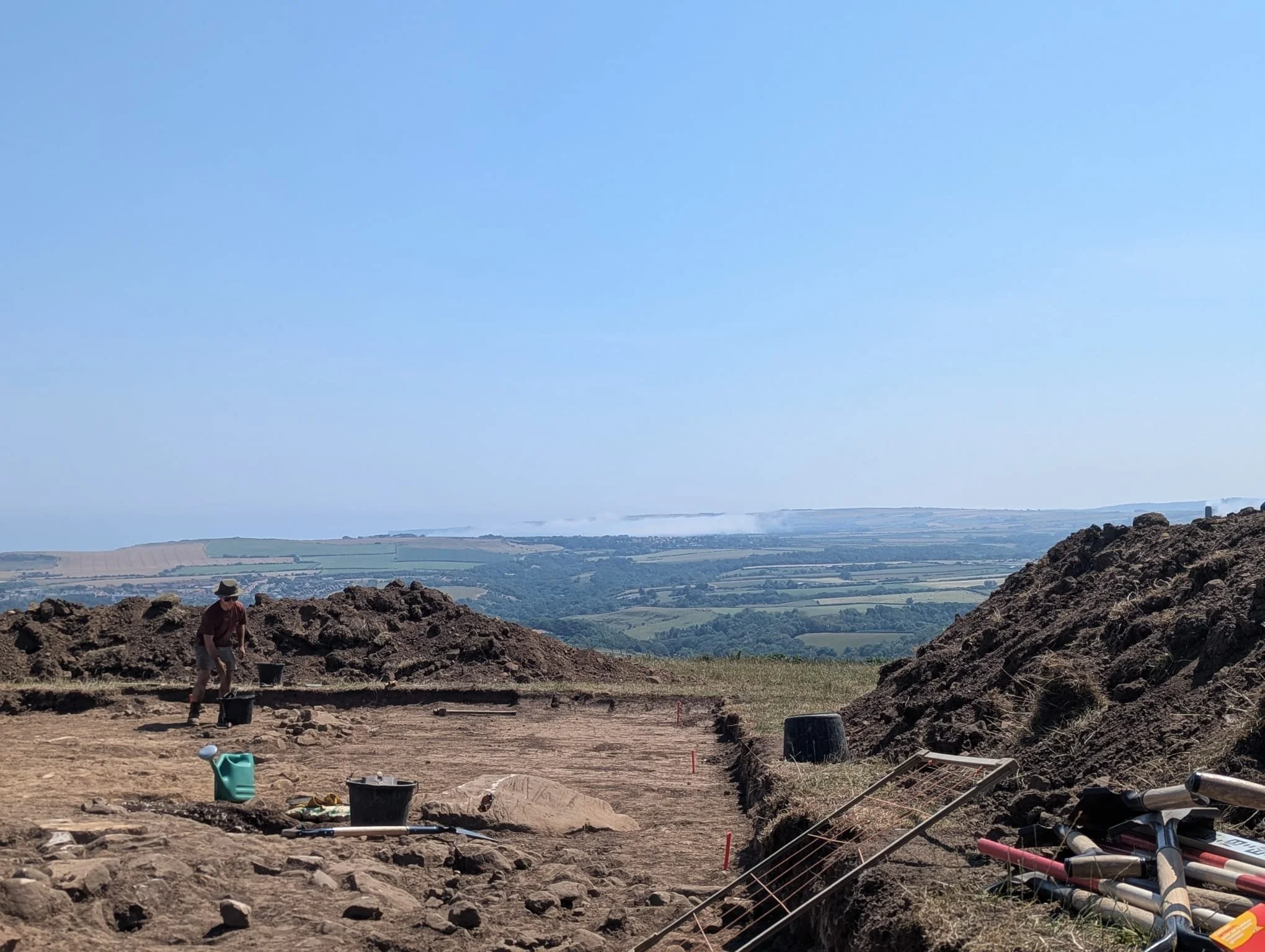
Photo credits, Ben Woodward
This year, I had the privilege to return to North Yorkshire for the month of July to participate in another archaeological dig with Dr. Steve Sherlock. This year, we were set to excavate a site thought to be home to a missing Roman signal tower between the two known towers at Huntcliffe and Goldsborough, North Yorkshire. This dig, however, quickly became much more interesting and complicated as we began to uncover signs of a Neolithic mortuary site, a large shell midden, where waste shells used for food or fishing were deposited, a set of what appeared to be Roman foundations for a substantial building, and several stone kist graves. Scattered throughout the site, there existed evidence of burning, demonstrated through charcoal flakes and fragments, Roman pottery, and Neolithic flint flakes (known as lithics). Both the features and finds suggested that this site has been in use sporadically for several thousand years, indicating that this region was on of importance for many past cultures and societies.
Not only was this site one of archaeological significances, though, but it was an excellent, unfiltered experience into the career of a professional archaeologist and a phenomenal learning experience for our Canadian team. On this site and under the supervision of several professional and experienced amateur archaeologists, our Canadian students learned the tools of the archaeological practice. We learned and practiced how to draw both sections and plans, each of which are to-scale drawings used to demonstrate the different layers and depths of feature and to express the details and appearance of an archaeological site and specific points of interest, respectively. Dr. Sherlock also showed us how to draft context sheets and to record and file them properly for future posterity. Additionally, our Canadian team was given the opportunity to learn the surveying equipment used to geo-reference the site so that the features and small finds (the pottery, flint, and other artifacts) can be plotted on an accurate map to assist in the interpretation of the historical activity on the site. The survey equipment used on site is known as the CHCNAV LT60H RTK Smartphone and is a device used in many applications that require precise geo-referencing data, including on construction sites, disaster areas, and general surveying. All these aspects are essential recordkeeping tools in an archaeologists toolbelt to preserve the methodology, findings, and to help interpret the results of the archaeological site.
The most important component of our education and experience at this site, though, was the independence of our instruction. While we were given clear instructions and demonstrations on how to dig properly, draft sections and plans, and fill out context sheets and supplementary information, we were also allowed to experiment and adapt our learning and apply our unique experiences to a dynamic and unpredictable site, all while under the supervision of a renowned professional archaeologist. We were never alone on site but were given the freedom and time to ask questions, learn and practice the new skills, and apply them to a real-world and important archaeological site.
Once again, this year’s Canadian team has come away from our archaeological experience with another set of valuable hard skills and experiences that we can take and apply to our research, careers, and everyday life.